 Orbit Odometer
The Solar System to Scale
True sizes, real distances, and how long light takes to cross them. Pick any two worlds and compare them in 3D. Every number comes from NASA fact sheets, linked at the bottom.
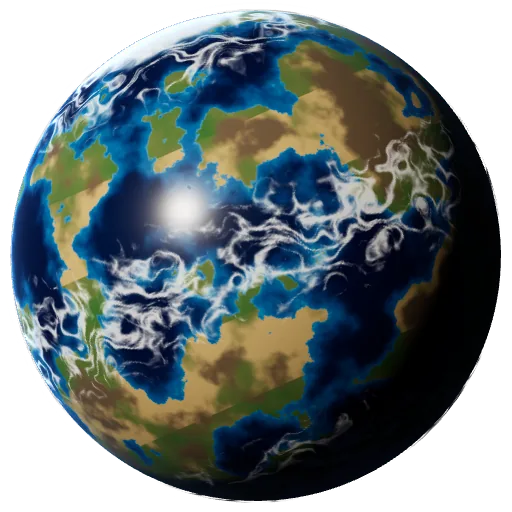
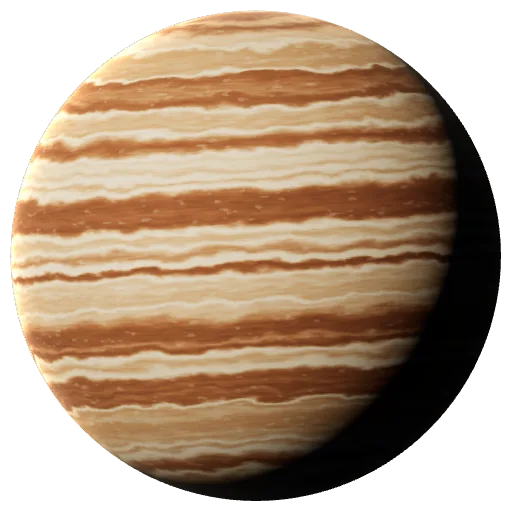
How big are the planets compared to Earth?
Jupiter is about 11.2 Earths wide and could hold about 1,321 Earths. Saturn is about 9.4 Earths wide, Uranus and Neptune about 4, Venus is nearly Earth's twin (95%), Mars is about half, and Mercury is just over a third.
Every world below is drawn at the same scale, with the edge of the Sun on the left. Swipe sideways, and use the slider to zoom.
| Object | Diameter (km) | Width vs Earth | Earths inside (volume) |
|---|
Earth: 12,756 km wide at the equator. Planet diameters are equatorial; the Sun uses its mean radius (695,700 km). Volumes are NASA's volume ratios to Earth.
How big is the Sun compared to Earth?
About 109 Earths would fit across the Sun, and about 1.3 million Earths would fit inside it. The Sun's mean radius is 695,700 km; Earth's is 6,371 km.
The curve is the Sun's edge at true scale with the dot. If the full Sun were 1 metre wide, Earth would be about 9 mm, roughly a pea.
▶ Watch: flying a jet to the SunCan all the planets fit between Earth and the Moon?
Not at the average distance. Line up Mercury, Venus, Mars, Jupiter, Saturn, Uranus and Neptune and they total 387,941 km. The space between Earth's surface and the Moon's surface averages 376,284 km, so the row is about 11,657 km too long. They only fit when the Moon is near its farthest point. Saturn's rings never fit.
- Earth to Moon (centre to centre)
- 384,400 km
- Space between the surfaces
- 376,284 km
- Seven planets in a row
- 387,941 km
- Scale
- The column is to scale, top (Earth) to bottom (Moon).
How far is everything? Fly out from Earth
How long would it take to get to Mars, the Moon or any planet?
Driving nonstop at 100 km/h, the Moon is about 160 days away and Mars at its very closest about 62 years. Real spacecraft are much faster but cannot fly in a straight line: NASA's Perseverance rover took 203 days and flew 472 million km to reach Mars.
How fast is light? Race it in real time
Light moves 299,792 km every second. Press start and watch how far it gets while you wait. It reaches the Moon in 1.28 s and the Sun in about 8 min 19 s.
Voyager 1 is one light-day away
On November 18, 2026, NASA's Voyager 1 reaches one light-day from Earth: about 25.9 billion km (16.1 billion miles). A command sent to it takes 24 hours to arrive and the reply another 24 hours. It launched in 1977 and is the most distant human-made object.
▶ Watch the Voyager ShortQuick answers
How far away is the Moon?
384,400 km (238,855 miles) on average. It swings between a mean perigee of 363,300 km and a mean apogee of 405,500 km. Light covers the average distance in about 1.28 seconds.
How far is Mars from Earth?
54.6 million km at its closest and 401.4 million km at its farthest, because both planets circle the Sun at different speeds. Light takes about 3 minutes at the closest and 22 minutes at the farthest.
How long does it take light from the Sun to reach Earth?
About 8 minutes 19 seconds at the average distance of 149.6 million km (between 147.1 and 152.1 million km over the year).
How many Earths fit inside Jupiter? And the Sun?
About 1,321 Earths fit inside Jupiter by volume, and about 1.3 million inside the Sun. Across, Jupiter is 11.2 Earths wide and the Sun about 109.
Which planet is closest to Earth?
At closest approach, Venus (38.2 million km).
How far is Neptune?
Between 4.3 and 4.7 billion km from Earth. Its light takes about 4 hours to reach us.
What is the nearest star?
After the Sun, Proxima Centauri, about 4.25 light-years away, roughly 40 trillion km. At Voyager 1's speed of about 61,000 km/h it would take over 70,000 years.
Sources and notes
- Planet diameters, volumes, distances from Earth: NASA NSSDCA Planetary Fact Sheet, ratio to Earth, and the individual sheets for Mercury, Venus, Mars, Jupiter, Saturn, Uranus, Neptune.
- Moon distance (384,400 km average; mean perigee 363,300 km, mean apogee 405,500 km): NASA Moon Fact Sheet and NASA Science Moon facts.
- Sun size, volume and distance: NASA Sun Fact Sheet.
- Saturn's main rings (A ring outer edge 136,780 km radius): NASA Saturnian Rings Fact Sheet.
- Perseverance: 203 days, 472 million km. NASA, "Touchdown!" (Feb 18, 2021).
- Voyager 1 one light-day (Nov 18, 2026; 25.9 billion km; about 61,000 km/h): NASA Science, Voyager 1: What Is a Light-Day.
- Proxima Centauri, 4.25 light-years: NASA Science, Our Nearest Celestial Neighbor.
- Speed of light: 299,792.458 km/s (exact, by definition of the metre).
Computed values (light times, travel times, the Earth–Moon line-up) are simple arithmetic on the numbers above. "Planets between Earth and the Moon" uses equatorial diameters; with mean diameters the row is 380,016 km and still doesn't fit at the average distance. Travel times are straight-line and nonstop; real trips curve around the Sun. Planet textures are generated by code and are illustrative, not maps. Orbit Odometer is not affiliated with NASA.